How to Plan for Porta Potty Rental Boston at Large Events
When you plan a large event in Boston, you tend to obsess over the things guests can see: stage positioning, catering timing, sound checks, and the route staff will take to move supplies without crossing guest flow. Bathrooms are not always in the same mental spotlight, until the moment the line starts forming and someone’s phone flashlight beam lands on a “restroom” sign that leads to nothing but confusion.
At scale, portable sanitation is logistics, not just convenience. Porta potty rental becomes part of crowd flow, public health risk management, and operational calm. Whether you’re coordinating portable toilets on rent for a marathon weekend, a neighborhood festival with a beer garden, or a corporate event that spans multiple sites, the planning has patterns. The decisions are practical. And the trade-offs are real.
Below is how I plan for Porta Potty Rental Boston when the event is large, spread out, or time-sensitive, with the goal of making sure guests never feel like they are waiting for something that should have been handled.
Start with the actual crowd behavior, not the attendance headline
The first mistake I see is using attendance as if it were a single number, evenly distributed over time. Large events rarely work that way. People arrive in waves, consume in waves, and leave in waves. If your bathroom plan matches the peak window instead of the average, you’ll feel prepared even when the schedule compresses.
I always ask a simple set of questions internally, even if the client answers them differently each time:
- How long are guests on site before the first major “break” moment?
- Are you serving alcohol, which can double restroom pressure without doubling guest count?
- Will there be kids or families, where frequency can be higher and supervision matters?
- Do you have entertainment that creates bursts of movement, like fireworks, a keynote, or a scheduled performance?
Those questions shape how many units you need during peak demand. They also shape whether you need more than one location. In Boston, site constraints can make “close enough” meaningless. A unit placed behind the stage might technically be accessible, but if the path creates friction, people won’t use it. Then the cluster forms elsewhere, usually where you least want it.
Choose locations like you’re designing foot traffic, because you are
A porta potty is only useful if people want to walk to it. On large event days, guests move toward what feels convenient: visible entrances, familiar lanes, and well-lit paths. If the portable toilets on rent are placed out of sight, behind a fence line, or too far from where people actually stand, you lose capacity even if you rented enough units.
I plan restroom placement with three lenses:
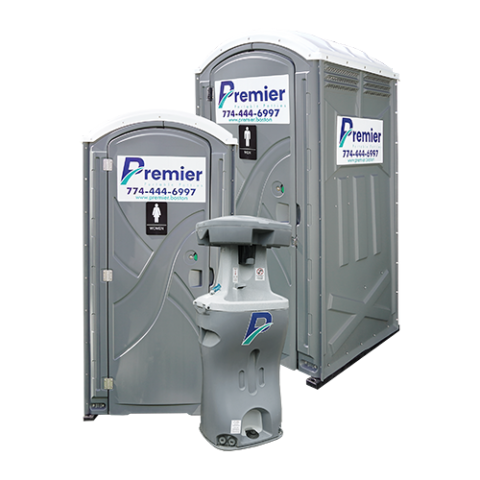
First is visibility. A bathroom shouldn’t require detective work. Second is proximity to the areas where restroom-triggering behavior happens: near food service, beverage stations, and high-density viewing areas. Third is how guests will navigate around it. Temporary barriers, accessibility ramps, and narrow sidewalks can turn a short distance into an uncomfortable trek.
For outdoor events, I also think about wind direction and how the unit sits relative to the crowd. Boston weather changes quickly, and what felt fine during setup can become a complaint during the afternoon. If the rental includes features like ventilation or if the vendor can position units thoughtfully, that’s not a “nice to have,” it’s part of reducing friction and complaints.
Match the unit type to the event risk level
Not every situation calls for the same approach. Some events are straightforward: daytime gatherings with clear staffing. Others come with higher risk, including higher foot traffic, tighter timelines, and less predictable weather.
This is where emergency portable toilet rental matters. If a storm hits, a vendor route gets delayed, or one delivery is missed, you need a backup plan that keeps sanitation coverage consistent. Large events can suffer from “single point of failure” thinking. If you rely on a perfect delivery schedule and there is no contingency, you’re betting guest comfort on factors you don’t control.
I typically treat emergency coverage as something you arrange in advance through portable toilet rental companies, not something you discover on a frantic phone call at 6 p.m. The best vendors can help you coordinate contingency quantities and placement so you can scale quickly when the event shifts.
Unit type also matters for accessibility. Boston has a dense urban layout, and guests may include older adults or people with mobility needs. If your plan includes ADA-friendly options, you reduce complaints and avoid last-minute scramble. Even when the event is “not fancy,” accessibility is still a public service. It’s also the difference between a smooth operational day and a disruptive patch.
Plan for peak, then plan for reality
It’s easy to think the “right number” is a simple math equation. In practice, the number you need depends on how often people can access the unit, how long lines grow before staff notice them, and whether there are enough attendants or restocking procedures to keep things functional.
Here’s the reality I plan around: at large events, even if the units are sufficient in theory, you can still run into shortages of supplies like paper. Or the units can be placed in a way that encourages skipping them. Or weather can push guests to seek indoor-like comfort, even if you’re outside.
So I plan in two phases.
First, I confirm peak coverage for the busiest time window. Second, I ensure there are operational buffers. That can mean additional units, better placement, and clear responsibility for checking supplies and cleanliness.
If you are offered “cheap portable toilet rental,” I don’t dismiss it outright. But I scrutinize what you’re trading for. Sometimes the difference is the number of service visits during the event, the quality of the cleaning process, the inclusion of handwashing options, or how fast replacements happen when something goes wrong. Cheap can be fine for a short, low-risk event with predictable usage. For larger events, the lowest bid can become the most expensive day in staff time and guest relations.
Handwashing and sanitation comfort are part of the experience
Bathrooms are not just about the toilet. Guests care about whether they can clean their hands. For many large events, handwashing stations are one of the most visible quality signals. When handwashing is missing, people notice even if they don’t say it directly.
You should also think through the flow around handwashing. If you place units and handwashing stations at the same bottleneck, you create a two-step line. If you spread them well and route people cleanly, you avoid congestion. In dense layouts, I sometimes Premier Portable Potties Portable Toilet Rental Boston treat handwashing as an additional “demand node” you have to plan for, not just an accessory.
If your vendor offers options to pair handwashing with Portable Toilet Rental, ask about typical placement and whether the stations require additional setup time. That impacts staffing and the delivery schedule.
Build the timeline around delivery windows and setup, not just the event start
Porta potty rental is not a one-day flip. In Boston, with permitting, traffic restrictions, and venue rules, your delivery window can affect everything. Some venues will allow placement only at certain times, or they may require you to have staging planned so the delivery crew can move equipment without disrupting other operations.
I set up a timeline with three milestones:
- When the first wave of units must arrive to avoid scrambling around guest access.
- When any additional units might be delivered for peak coverage upgrades.
- When service visits should happen so supplies and cleanliness stay consistent.
If you need portable toilets on rent for a multi-day event, ask about service frequency and what triggers an unscheduled visit. If you’re planning a coordinated operation, it’s worth aligning the vendor’s service schedule with your event staff’s shift changes. That way, someone can verify conditions and escalate quickly if there’s a problem.
This is also where contingency planning comes in. If you’ve arranged emergency portable toilet rental options, you want to know how quickly a replacement unit can be deployed and whether it needs a fresh setup. Plan for a scenario like a sudden increase in attendance, a weather event, or a performance that drives an unexpected crowd surge.
Work the permitting and site rules early, especially in Boston
Boston event sites can come with rules that feel like they’re designed to slow everything down. That’s not always the intent, but it’s the outcome when planning is late.
Your rental agreement should clearly state what the vendor will do for placement, leveling, securing, and removal. Some venues require a certain footprint, approved locations for temporary equipment, and proof of servicing or sanitation handling. You do not want to be negotiating details while the setup crew is standing there with the equipment and a delivery window is expiring.
When I coordinate with portable toilet rental companies, I ask for Porta Potty Rental Boston Premier Portable Potties specifics: where they typically place units on similar sites, what they need from the venue (like escort or access points), and how they handle blocked walkways. That helps avoid a situation where you reserved the correct quantity but put it somewhere the venue won’t approve.
Staffing, signage, and vendor communication are the quiet difference
On large event days, what guests experience is often shaped by signage and staff presence more than by the unit itself. If bathrooms are clearly marked, well lit, and easy to reach, you reduce line frustration. If guests can’t locate them, you generate complaints even when the units are available.
Signage matters most where the path splits. At entrances, near food, near the main seating area, and at key walking junctions, I keep the restroom direction simple and visible. If you have multiple toilet clusters, don’t make it a scavenger hunt.
Then there’s communication. If a unit is missing, full, damaged, or out of supplies, someone needs to know quickly how to escalate. I prefer to have one point person for the vendor and one internal point person for the venue operations. That reduces the back-and-forth calls that lead to delays.
If you plan service visits, make sure your staff knows what normal looks like. If the vendor is responsible for cleaning and restocking, your job is to notice when the situation is changing. For example, a sudden increase in lines after a headliner performance might mean you need additional temporary placement or an extra service cycle that evening.
A practical way to estimate quantities (without pretending math is perfect)
I won’t pretend there’s one universal formula that works for every event. People drink differently, weather changes behavior, and event layout influences usage. But you can still estimate responsibly.
The key is to plan based on peak attendance patterns, not just headcount. Ask your rental provider what guidance they use for large events and whether their recommendations assume certain usage rates, unit types, and event lengths. A reputable Portable Toilet Rental provider should be able to talk through the logic, even if they can’t promise a single number will fit every scenario.
In Boston, I also consider that some events are in walkable urban areas where guests may leave the site briefly to find alternatives. That behavior cuts both ways. If they leave often, you may need fewer units. If they don’t leave because the venue is controlled or barriers limit movement, restroom demand stays concentrated at your stations. Your estimates should reflect the guest reality, not your assumptions.
If you’re choosing between options, treat “quantity” and “placement” as linked variables. Sometimes fewer units placed better beats more units dumped in one location.
When “large” means multiple zones: plan clusters, not a single solution
Large events in Boston often have multiple zones, like a food court area, a performance field, a vendor row, and a kids’ activity area. If you only plan for one cluster, you create a long trip for the zones farthest away. Guests will rationalize the trip until they’re forced to go. That’s when the line forms and your operational calm disappears.
Instead, cluster portable toilets on rent near each high-demand zone. The exact number depends on crowd density and length of time spent in each area, but the planning principle is consistent: reduce walking distance and reduce the stress of searching.
This is also where accessibility planning becomes more complex. If you place ADA-friendly units in only one zone but most guests with mobility needs spend time elsewhere, the units become underutilized. You might not need more total units to fix this, but you may need to redistribute.
What to ask your vendor before signing (so there are no surprises)
If you’ve ever tried to fix a restroom issue mid-event with unclear terms, you know how fast it becomes stressful. The best way to avoid that is to clarify expectations up front with portable toilet rental companies.
Here are the questions I’d ask in a call or in writing:
- What is included in the rental price, especially service visits during the event?
- How are units cleaned and serviced, and what happens if a unit is out of supplies?
- What is your replacement and emergency portable toilet rental process if deliveries or service are delayed?
- Can you support accessible units and how do you recommend placing them on our site?
- What are the delivery and pickup windows, and who handles securing and placement requirements?
That list is short, but it forces the conversation into specifics. You’re not trying to catch the vendor out. You’re trying to line up responsibilities so your team can focus on event execution.
Common edge cases that derail bathroom plans
Large events are never perfect, and bathrooms are where small problems become visible quickly. These are the edge cases I plan for because I’ve seen them happen more than once.
Weather is the big one. Wind and rain can drive guests to cluster in sheltered areas, changing where demand concentrates. That means your units might be positioned “right” on paper but “wrong” in practice when conditions shift.
Another edge case is high-density consumption points. A beer garden can generate restroom demand that feels disproportionate, especially when there are long lines for food and people decide to wait together. If people are already stuck in a queue, their restroom patience shrinks. The restroom line then becomes an extension of that crowd. It can either stay calm or become a pressure point depending on how well you planned for the busiest area.
Then there’s staffing. Even if the vendor service visits are scheduled, someone internal needs to be able to report issues quickly. If the only person who can contact the vendor is tied up running the stage, you can lose time. Bathrooms don’t wait.
Finally, there’s the issue of “competing convenience.” If there are nearby businesses, portable restrooms can still be underused if guests believe they can find alternatives. That might sound like a bonus until the moment those alternatives are closed or inconvenient, and restroom demand surges onto your units.
Planning for these issues is why I treat Porta Potty Rental Boston as part of the operational plan, not just a line item.
Budgeting: cheap matters, but predictability matters more
Budget is always part of the conversation. Everyone wants cheap portable toilet rental, especially for events where margins are tight. But I approach budgeting as a balance between cost and operational predictability.
A lower rate can be worthwhile when the event is short, the crowd is steady, and the site allows for easy placement and maintenance. It becomes risky when you rely on minimal service frequency, limited emergency coverage, or fewer units during peak windows.
Instead of focusing only on the unit price, I look at the full picture: the service cadence, the response time for issues, and whether replacements are realistic during the event. If emergency portable toilet rental is available as a true backup, not a vague promise, that changes the risk math. When you can replace quickly, you can plan more confidently.
Also consider the hidden cost of complaints and disruption. Even if you save money on the rental, you might pay in staff overtime, guest dissatisfaction, and the reputational hit that comes with visible sanitation problems.
The day-of workflow that keeps things smooth
On event day, you want to treat restroom management like a small operations system. The vendor handles the sanitation tasks, but your team handles observation and escalation.
I usually assign a quick internal routine: someone checks units at set intervals, focused on the things guests experience. Are lines forming unexpectedly? Are signs visible? Are handwashing stations stocked? Are units being used as planned, or are they being ignored due to location or access?
If anything changes after a performance or a schedule shift, you adjust. Sometimes that adjustment is as simple as placing additional signage. Sometimes it’s an operational change, like coordinating an extra service visit. Larger adjustments involve emergency portable toilet rental if demand exceeds the original plan.
The most successful bathroom setups are not the ones that never have issues. They are the ones that detect issues early and correct them before they become guest experiences.
After the event: removal, cleanup, and documentation
Most people remember the event, then forget the logistics that follow. For portable sanitation, cleanup and removal are also part of planning.
Confirm your pickup timeline. Make sure the vendor understands the site’s post-event access rules and what areas they need to clear. If you’re working with venue management, document where units were placed and whether any site damage occurred, even in minor ways. It protects both you and the rental provider and keeps future planning smoother.
If your event is part of an ongoing series, capture lessons learned. Did guests prefer one cluster over another? Were accessible units located where they were actually needed? Did weather concentrate demand? Those notes help you improve the next Porta Potty Rental Boston plan without starting from scratch.
Final thoughts on planning for portable sanitation at scale
Planning portable toilets on rent for large events is one of those tasks where good judgment beats guesswork. The right number of units is important, but placement, peak-demand thinking, and vendor responsiveness matter just as much.
If you build the plan around real crowd behavior, align your timeline with Boston site realities, and clarify service and emergency processes with the portable toilet rental companies you choose, you end up with a restroom setup that guests rarely notice. That’s the goal, because the best compliment is when the bathrooms simply work and the event stays focused on what people came for.
And if you’re comparing options, don’t treat cheap portable toilet rental as a single metric. Treat it as a package. The lowest price means little if it comes with unpredictable service, weak contingency, or unclear responsibilities.
If you want, tell me a few details about your event, like event length, expected peak attendance, indoor or outdoor, alcohol service, and the general layout (single area or multiple zones). I can help you think through the practical planning decisions that determine whether the rental will feel effortless on the day.
Premier Portable Potties
35 Industrial Dr, East Bridgewater, MA 02333, United States
(774) 444-6997
[email protected]
website: https://www.premier.boston/